
Reviving a Residential Ecosystem with Regenerative Practices
Introduction
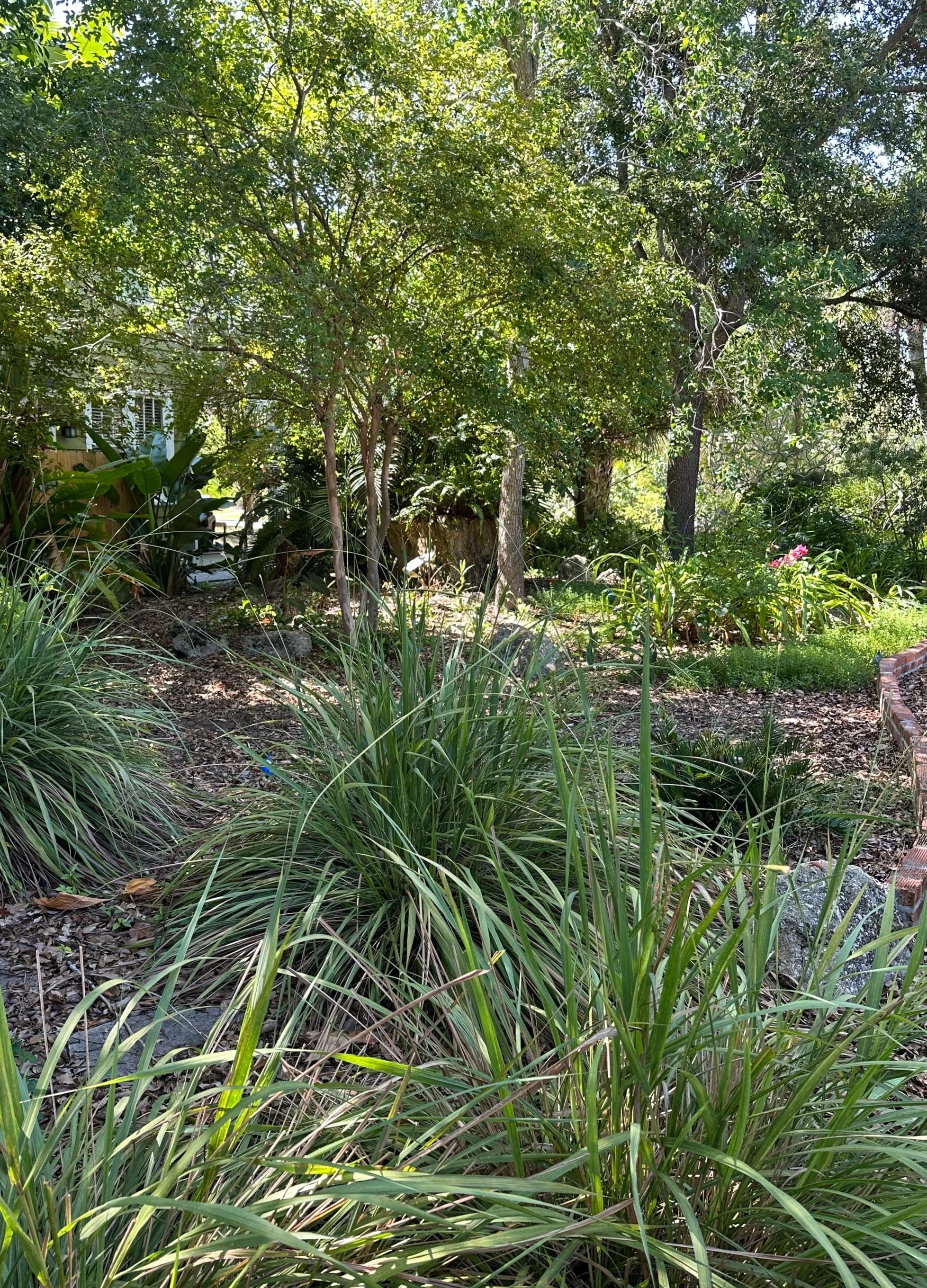
A current photo (2024) of Fakahatchee grasses, understory trees
In 2022, we embarked on a transformative journey with an ambitious project that blends regenerative practices with a commitment to sustainability. This ongoing endeavor, themed "FL Woodsy," reimagines a double-lot property by integrating re-wilding techniques and plant communities.
Our focus is on future performance and ecological balance rather than striving for an idealized, unattainable past.
Regenerative Design
By employing sustainable, drought-tolerant designs, we enhance air quality, mitigate the urban heat island effect, and create habitats for wildlife and declining pollinators, such as honeybees. These efforts are crucial in supporting the broader ecosystem and promoting biodiversity.
“The high-maintenance lawns and clipped shrubbery of office parks & suburban yards will seem increasingly odd with every large-scale natural disaster or water shortage.” - Thomas Rainer & Claudia West
Emphasizing Plant Communities
Our project highlights the importance of diverse plant communities. By focusing on layered plantings, we maximize the ecological function of small spaces, creating more “nature” within the landscape. This strategy ensures a richer biodiversity and a more resilient ecosystem.
“We hunger for an authentic connection with the landscape that engages our senses and fills us with wonder.”- Thomas Rainer & Claudia West
The client expressed his need for peace and connection with his property. His biggest challenge was finding a landscaper who knew about the plants and their needs. The success has been working towards his goal which we captured from the start and continuously pushing towards it as the landscape evolves with the climate and growth. Ongoing project management ensures the future of the design is protected, and decisions are effectively communicated with the client and the maintenance team.
Project Overview
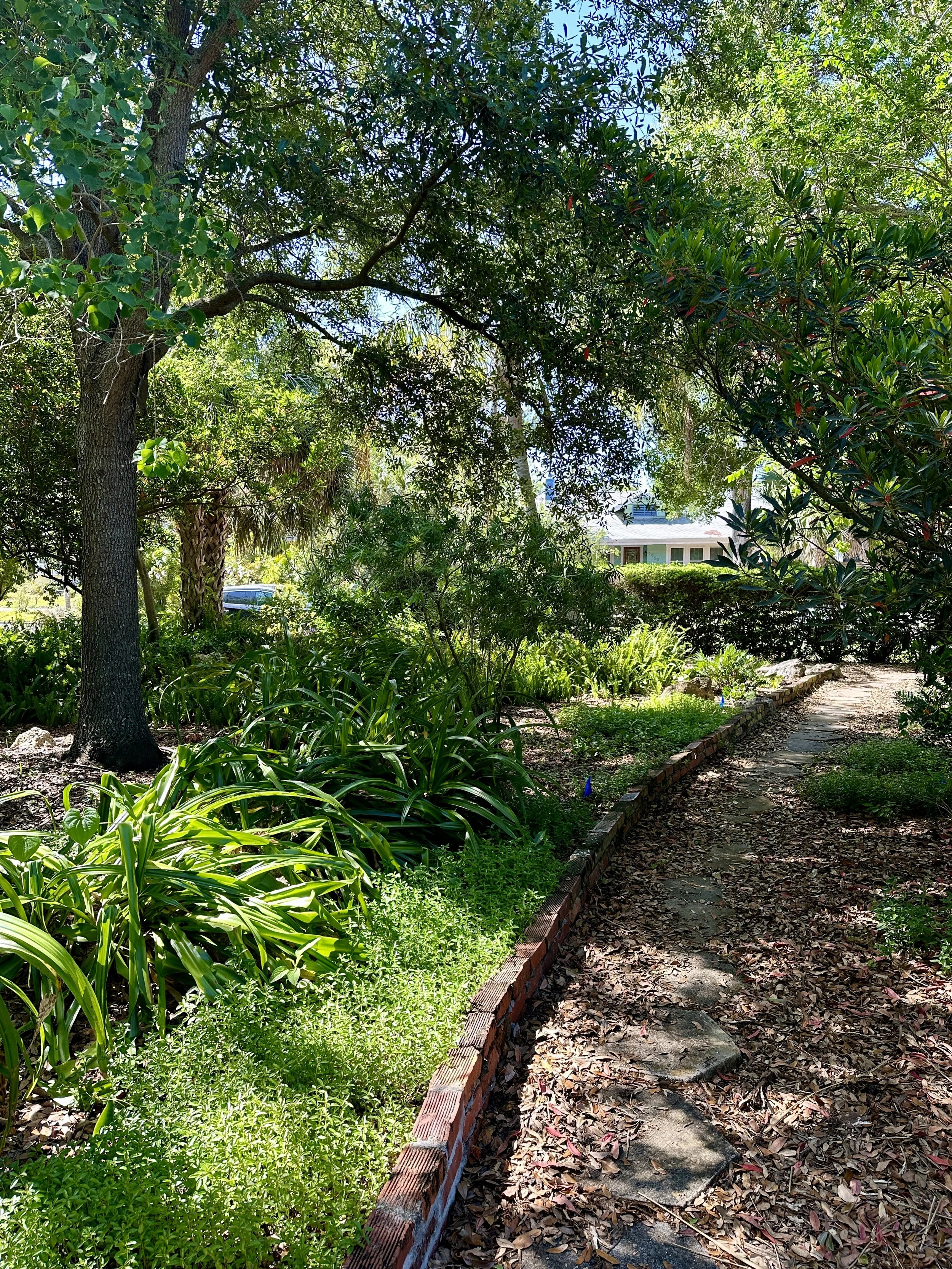
A current photo (2024) of “ancient” lilies, hammock twinfower groundcover, ferns, and oaks along a pathways
The project began in 2022 with a client who cherished the wild look of Florida, drawing inspiration from Weedon Island. The property's layout, featuring a shady woodland area, guided our design process.
Initial Steps
We started by removing most invasive plant species that did not serve an ecological purpose. Monthly maintenance ensures the continued removal of any new invasive species. By extending existing pathways and utilizing extra hexagon pavers, we adapted the property to meet the client's preferences. We also maintained and shaped the ferns, adding aesthetic value and ecological function, even though not all were native to Florida.
West Easement: Creating a Pollinator Haven
On the west easement, we installed Florida native wildflowers to attract pollinators and create a meadow-like appearance. This area now serves as a vibrant habitat for bees, butterflies, and other pollinators, contributing to the overall health of the ecosystem. “We long to feel small in the midst of an expansive meadow...”
East Side: Embracing Shade-Loving Plants
On the fully shaded east side, we planted native wildflowers and plants that thrive in dappled sunlight and shade. Using permaculture methods, we created a layered landscape: a canopy of oaks, a sub-canopy of crepe myrtles, shrub layers of ferns, wild coffee, firebush, and fakahatchee grass, with hammock twinflower as the main ground cover. This approach ensures a balanced and sustainable ecosystem.
South Easement: Enhancing Soil Health
On the south easement, including the front of the home, we began incorporating smaller shrubs and ground cover to add color and protect the soil. Initially, in 2022, we applied mulch throughout the area and plan to reapply it after the summer of 2024. In the interim, the leaves from the canopies act as a natural mulch, enriching the soil and maintaining moisture.
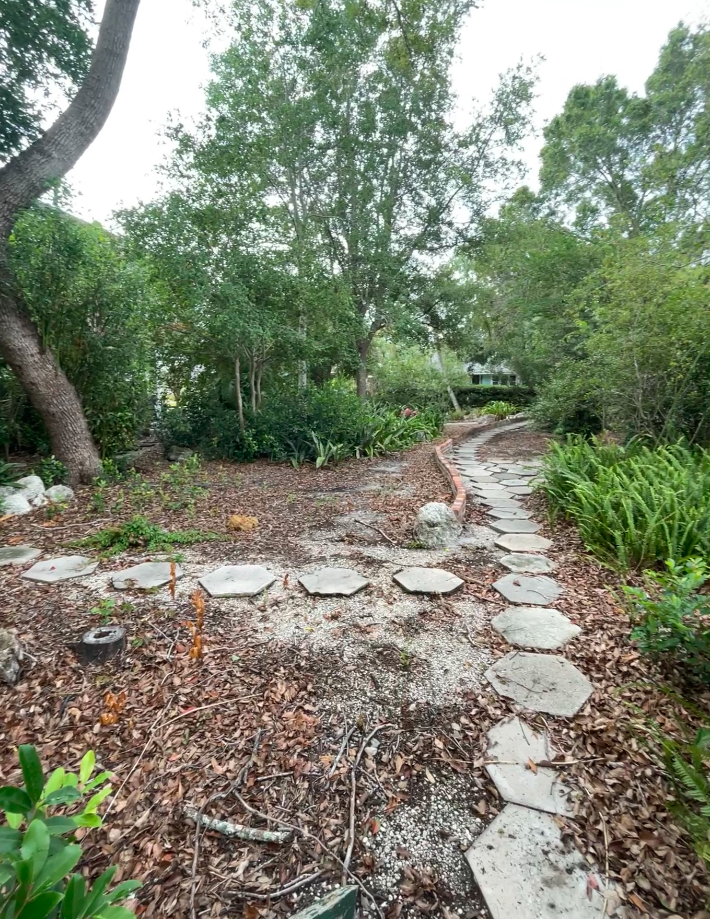
Before the install of the project (in 2022) Example of soil erosion throughout the property
Addressing Soil Erosion
One significant challenge we faced was soil erosion from stormwater runoff. The water flowed from the house down the sidewalk and off into the easement, causing erosion issues. To manage this, we created a natural creek in the easement using the client’s limestones scattered around the property. This creek redirects the water, preventing it from flowing out into the street, and instead keeps it within the easement to nourish other plants. This natural solution not only mitigates erosion but also enhances the landscape’s ecological function.
Client’s Perspective
The client frequently remarks on the dynamic beauty of the property. From the many windows in his home, he observes a constantly evolving landscape—a new flower, leaf, or branch, birds feeding their young, and butterflies fluttering by. This ongoing project not only enhances the aesthetic appeal of the property but also nurtures a thriving, sustainable ecosystem.
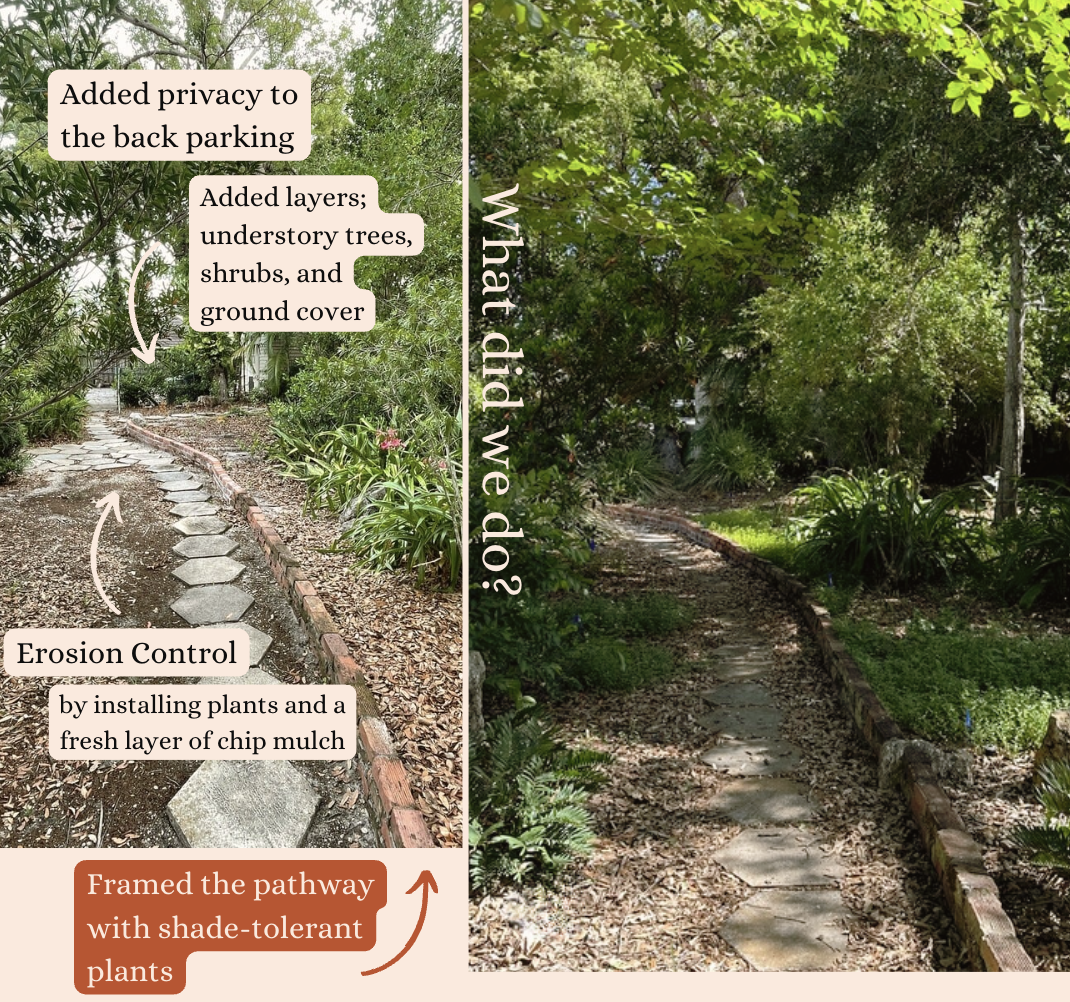
Before 2022 // After 2024
Conclusion
Our regenerative project since 2022 exemplifies how re-wilding and thoughtful plant community integration can transform a space into a vibrant, sustainable habitat. By focusing on future performance and ecological balance, we are creating a healthier, happier environment that supports both the client’s vision and the broader ecosystem.
• Planting in a Post-Wild World by Thomas Rainer & Claudia West